Just had lots of fun running the 12v supply from the engine bay
of my car to a point just under my dashboard. Modern cars really know how to
squeeze every last inch of space. After an hours hard work and some cut hands I
finally got the cable to the correct location. I was happy to see my rig
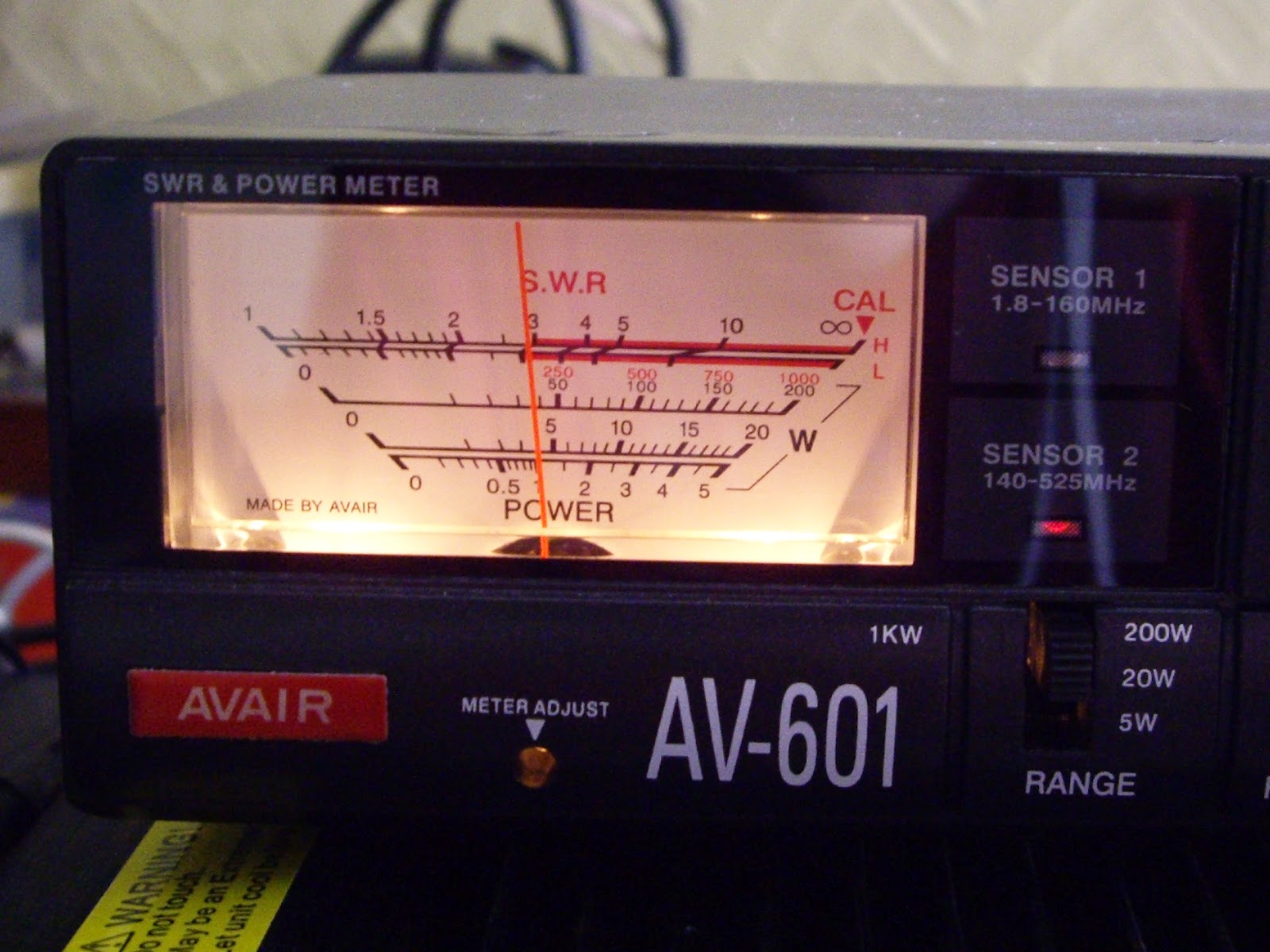
powering up and quickly grabbed a SWR meter to test the antenna. With an output
of 50 Watts I have a near 1:1 SWR across the repeater and main transmission
frequencies. A quick audio check confirmed I could contact Kent from the
Danbury repeater. My next test is to try out the rig whilst mobile, probably on
my way to work. The rig sits nicely on its slide mount and can be easily fitted
and removed. I’ll probably run a short length of coax so that when I fix the
mag mount I won’t have trailing leads in the foot well. Let me know if you plan
to make your own slide mount and need any advice.
This blog covers amateur radio advice and techniques. I plan to show the reader how to get started in ham radio after they have passed the exams. A lot of the news will be based on homebrew projects. Please leave comments if you would like more details on any of the subjects I talk about.
Showing posts with label FM. Show all posts
Tuesday, 18 June 2013
Wednesday, 26 September 2012
My new 2m Power Amplifier
Now that I am using my Wouxun handheld unit in my car, I feel that its 5 watt output is a little on the weak side. Recently I spotted a 2m amplifier on eBay and decided to try a few bids. The device was described as untested but the seller said the lights came on and there was a circuit diagram available on the Internet. I kept my fingers crossed as the minutes ticked away but I eventually won the amplified for just over £30. It soon arrived so I set about making up some new patch leads so I could test it.
This amplifier produces around 30 watts of output from 5 watts in. It also has an adjustable RX amplifier. The unit is made by "Tokyo Hy-Power" and the model number is HL-37Vsx. I first decided to power it up and ensure it didn't do anything strange such as smoke or draw too much current. In its idle state all seemed well. I then connected it to my rig and antenna so I could test the RX amplifier. I found a suitable signal which was a conversation on the local Cambridge repeater. As you will see from the short video below, moving the sliding potentiometer adjusted the signal strength. This RX amplifier can be left at a suitable level or turned off altogether. As I tend to use the Cambridge repeater when mobile, I will probably set this to a reasonable level as it'll be hidden away and not accessible whilst driving.
Next on the "todo" list was to check the SWR whilst transmitting 5 watts into a dummy load. I did this with the amplifier switch off and then switched on. With the unit off the SWR was about 1.3:1 and with it on it was just about 1:1.
The final test was to see if the amplifier was living up to its name and actually amplifying. My transmitter was configured to output 5 watts. With the amplifier turned off and my power meter set to 20 watt fsd, the meter showed an output of just over 3 watts of FM.
I then changed my meter to display 200 watts fsd and switched on the amplifier. The meter showed an output of 40 watts of FM.
The manufacture's specification says I can expect an output of around 20 to 35 watts with a maximum input of 5 watts. With my meter showing an output of 40 watts I am happy that this is probably about right, give or take a few watts. At this point my dummy load was getting rather warm so I completed my basic testing. The next test will be to try some on-air contacts to see that the audio isn't being distorted etc. I will then need to buy some additional coax to enable me to set this up in my car. So far this amplifier seems like a good purchase.
This amplifier produces around 30 watts of output from 5 watts in. It also has an adjustable RX amplifier. The unit is made by "Tokyo Hy-Power" and the model number is HL-37Vsx. I first decided to power it up and ensure it didn't do anything strange such as smoke or draw too much current. In its idle state all seemed well. I then connected it to my rig and antenna so I could test the RX amplifier. I found a suitable signal which was a conversation on the local Cambridge repeater. As you will see from the short video below, moving the sliding potentiometer adjusted the signal strength. This RX amplifier can be left at a suitable level or turned off altogether. As I tend to use the Cambridge repeater when mobile, I will probably set this to a reasonable level as it'll be hidden away and not accessible whilst driving.
Next on the "todo" list was to check the SWR whilst transmitting 5 watts into a dummy load. I did this with the amplifier switch off and then switched on. With the unit off the SWR was about 1.3:1 and with it on it was just about 1:1.
The final test was to see if the amplifier was living up to its name and actually amplifying. My transmitter was configured to output 5 watts. With the amplifier turned off and my power meter set to 20 watt fsd, the meter showed an output of just over 3 watts of FM.
I then changed my meter to display 200 watts fsd and switched on the amplifier. The meter showed an output of 40 watts of FM.
The manufacture's specification says I can expect an output of around 20 to 35 watts with a maximum input of 5 watts. With my meter showing an output of 40 watts I am happy that this is probably about right, give or take a few watts. At this point my dummy load was getting rather warm so I completed my basic testing. The next test will be to try some on-air contacts to see that the audio isn't being distorted etc. I will then need to buy some additional coax to enable me to set this up in my car. So far this amplifier seems like a good purchase.
Labels:
2m,
amplifier,
FM,
mobile,
power meter,
SWR,
Tokyo Hy-Power,
Wouxan
Subscribe to:
Posts (Atom)